Cullen Booking systemRole: Product & UX/UI Designer (sole designer)
Duration: 2 weeks
Platform: Web (booking flow)
Tools: Figma Make · Figma · FigJam
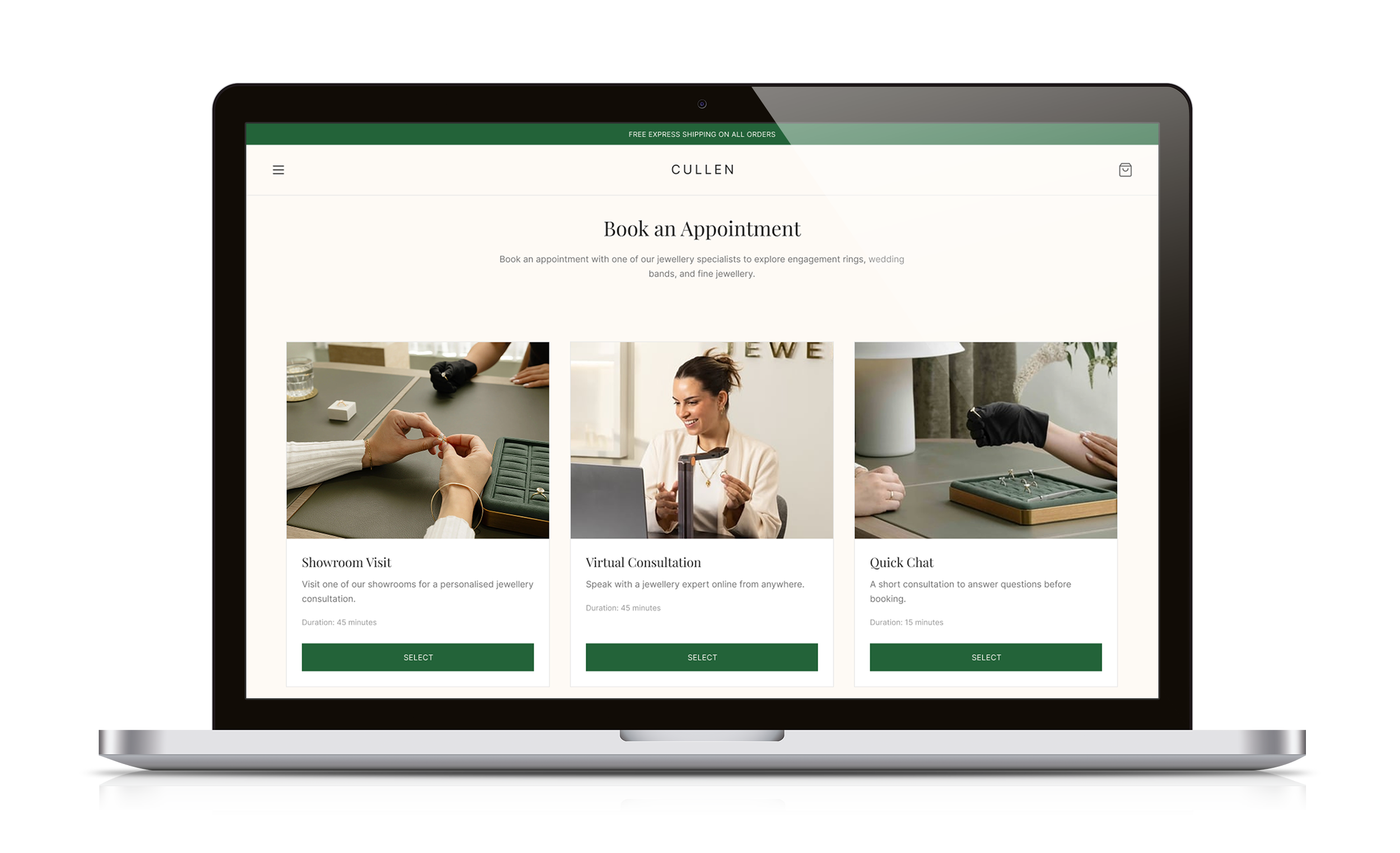
Cullen booking system redesign
Approach
Analysed the booking experience to identify failure points, structural issues, and unclear communication
Reframed the experience into a decision-based journey aligned with user intent
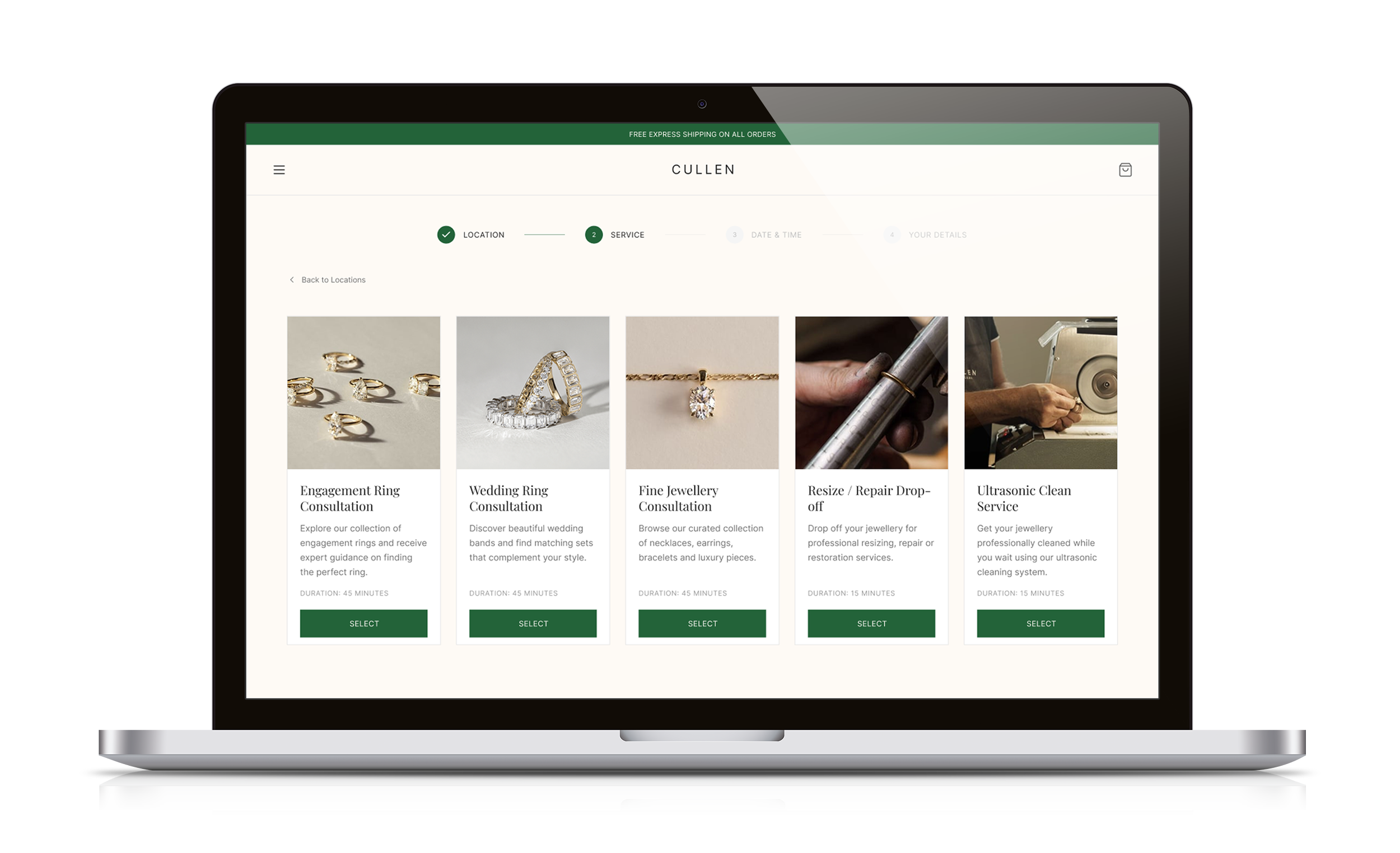
Restructured service categories to reflect real user needs:
Showroom consultations (e.g. engagement rings, jewellery browsing)
Aftercare services (e.g. resizing, maintenance)
Refined UX writing to improve clarity and guide user decisions at each step
Introduced alternative pathways to maintain progression:
Next available showroom slot
Waitlist option
Virtual consultation
Live chat support
Developed structured flows and prototypes to communicate interaction logic
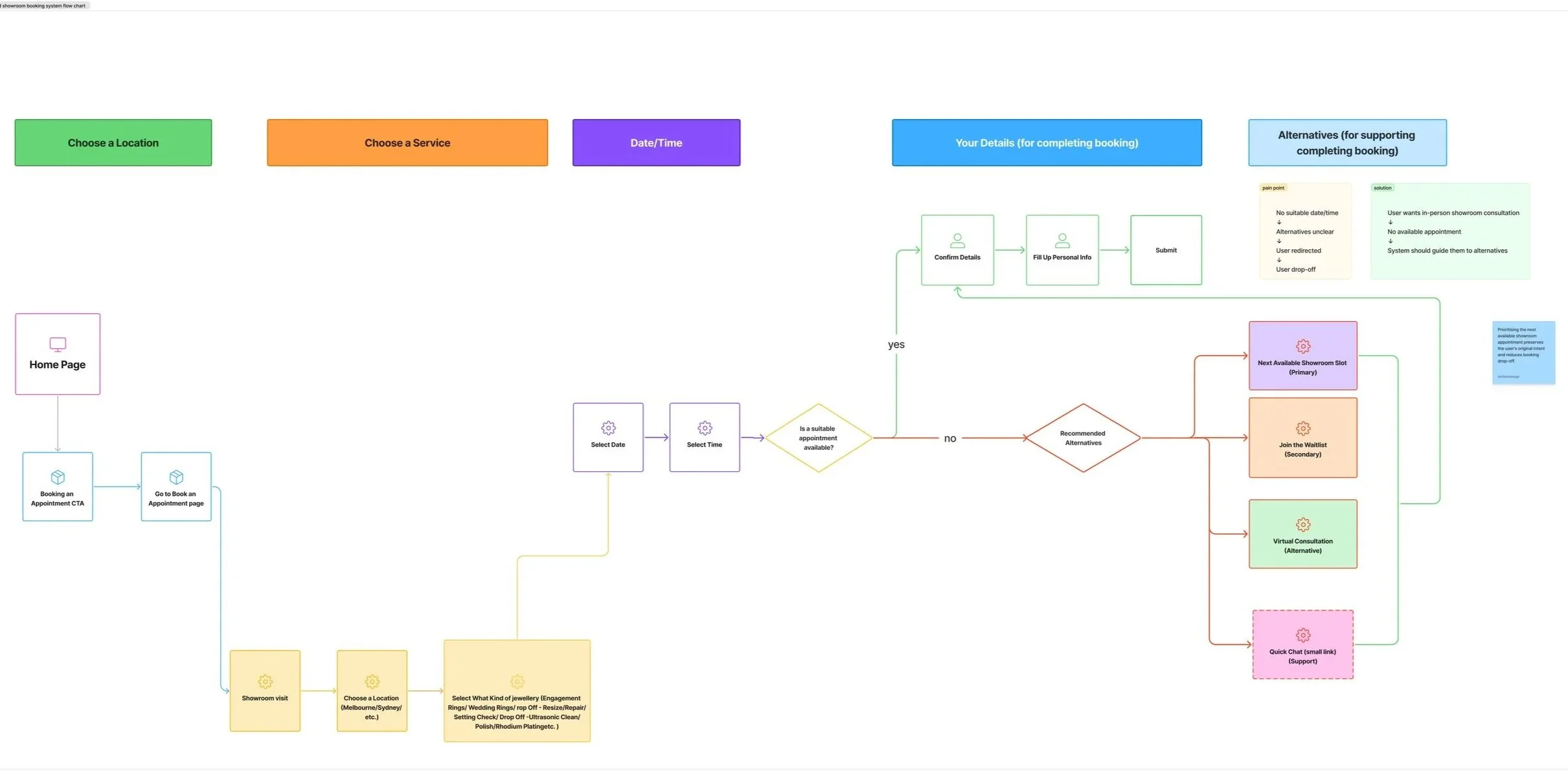
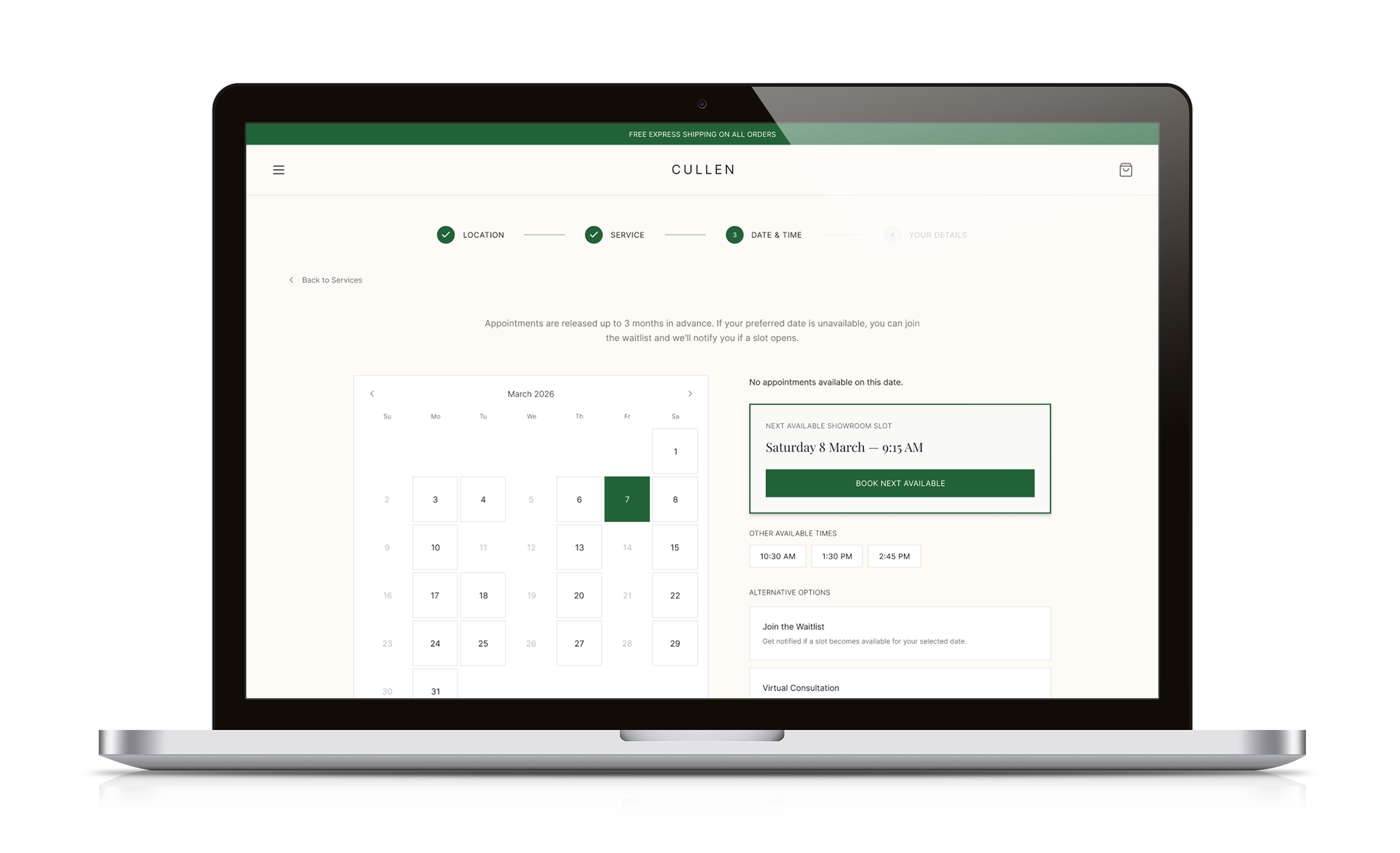
Improved booking system user flow
Cullen booking system redesign booking page
New booking system redesign
Overview
Redesigned a showroom booking experience to address critical drop-offs caused by unavailable appointment times, unclear service categorisation, and inconsistent UX communication.
The existing system led users into dead ends when preferred times were unavailable and grouped different service types (e.g. showroom consultations and aftercare services) within a single flow, creating confusion and friction.
The project restructured the booking journey into a clearer, decision-based system with improved categorisation, guided alternatives, and more intentional UX writing. The solution was presented to stakeholders, alongside scenarios and rationale, and received strong positive feedback.
Outcomes
Transformed a dead-end booking flow into a guided, recoverable journey
Improved clarity by separating distinct service types and booking intents
Reduced friction through clearer UX writing and decision guidance
Enabled continuous user progression with alternative pathways when availability fails
Established a scalable structure for future booking and service expansion
Key Issues
Users unable to find suitable time slots → immediate drop-off
No recovery mechanism when availability fails
Different service types (e.g. showroom vs aftercare) grouped under one flow
UX writing lacked clarity, making decisions harder for users
Linear flow forced a single path with no flexibility
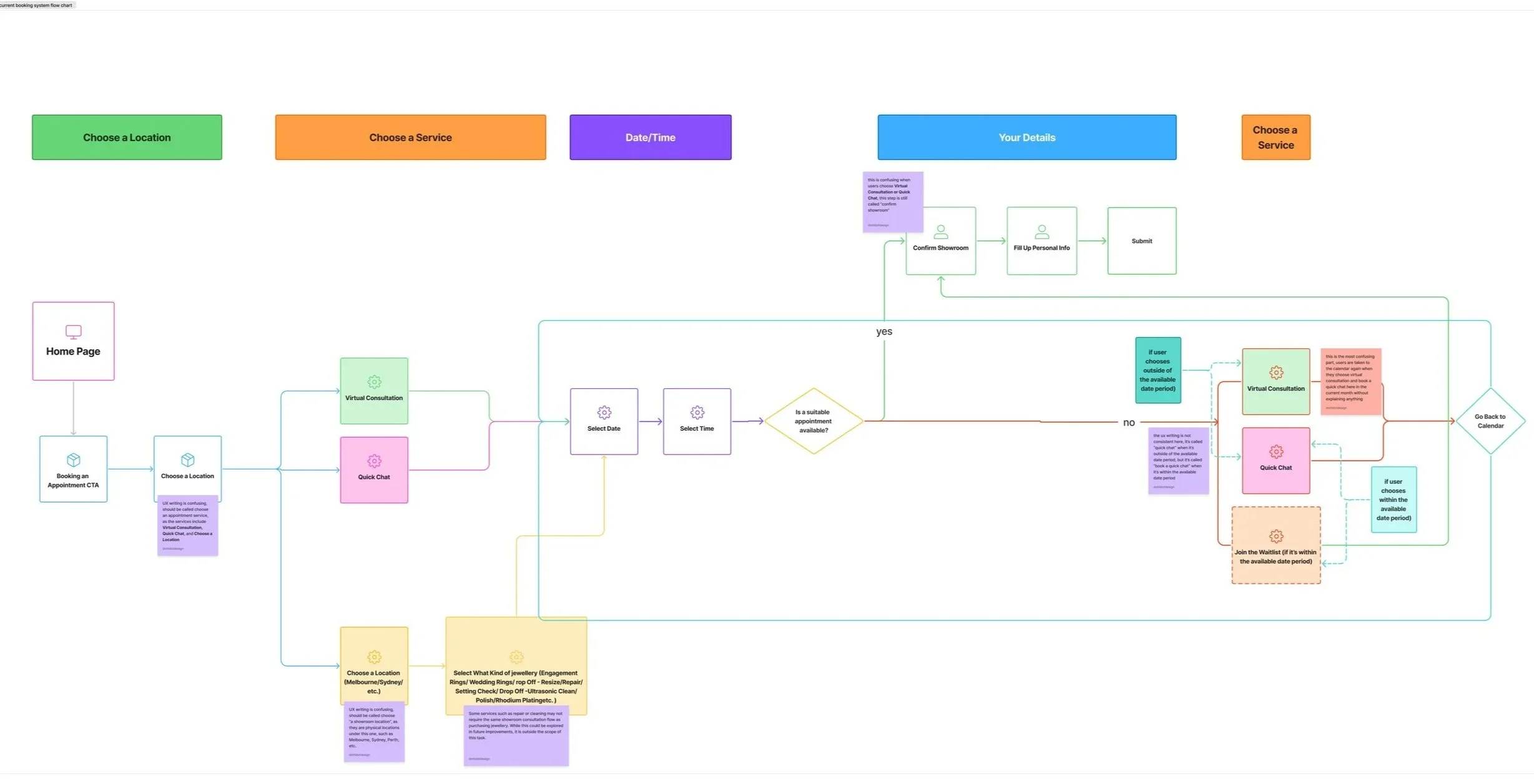
Current booking system user flow
Key Contributions
Identified UX gaps across flow, information architecture, and communication
Designed a multi-path booking system that adapts to availability constraints
Improved information architecture by separating service intents
Strengthened UX writing to support clearer decision-making
Presented user scenarios, flows, and rationale to stakeholders
Facilitated discussions around user needs, booking behaviour, and experience design
Result
A more resilient booking experience that reduces drop-off and supports user intent
Clearer structure and communication improving overall usability
Strong stakeholder understanding of the proposed experience and design rationale
Positive feedback on both the solution and the clarity of presentation